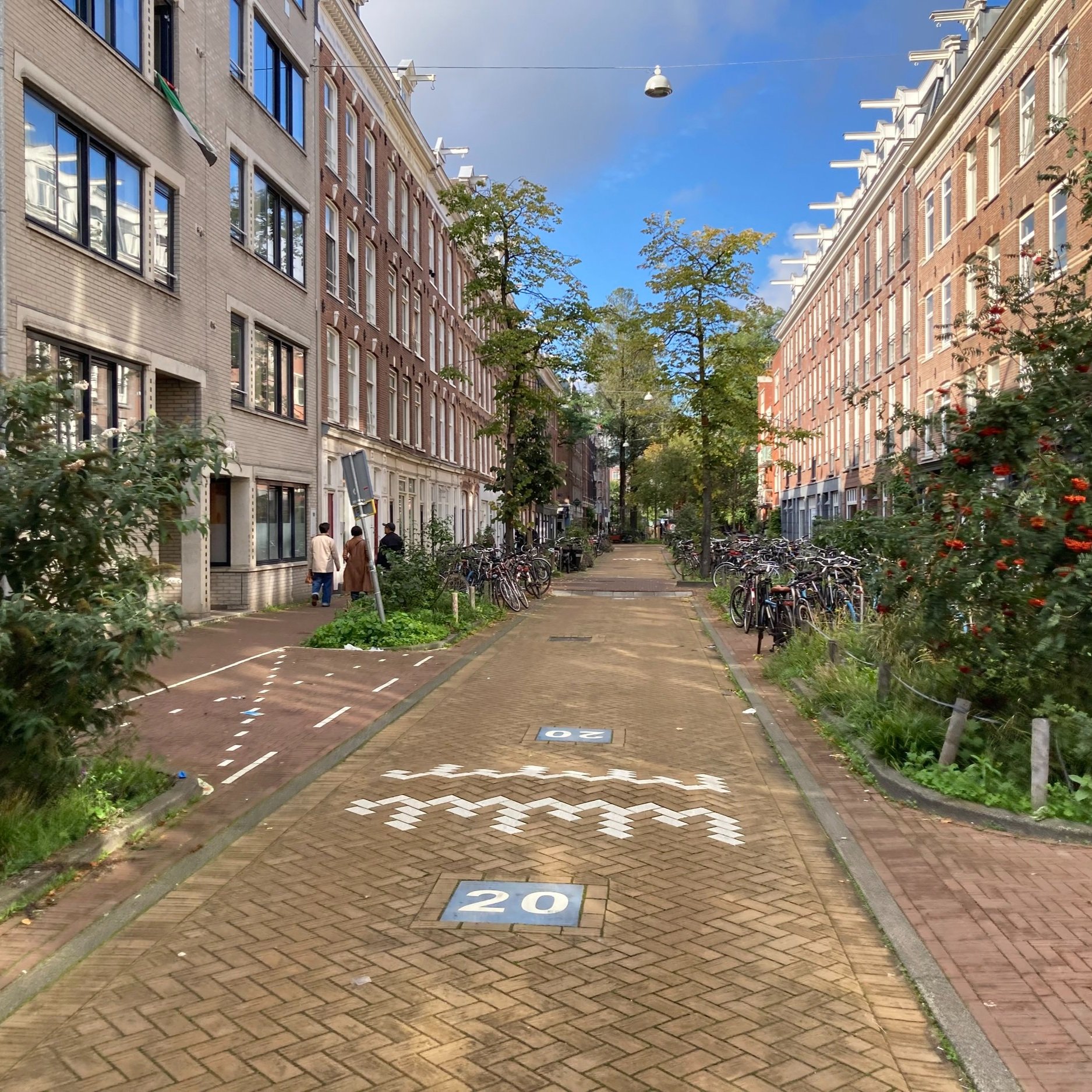
By Avi — I went on a research trip to the Netherlands, the land of bikes, het land van fietsen. Here’s a handful of lessons I learned.
1. Winning is about usage — The number of people riding bikes is unbelievable. Twice, I sat in cafes and furiously scribbled notes on passersby on bikes, for example:
Man, 30s, guitar and amp.
Two women, 20s, laughing.
Man, 55, cargo bike, camping gear(?)
Mom, 45, and daughter, 15 (not talking).
Woman, 70s, dressed up, trench coat.
Each time, I filled up a page in five minutes with a tiny fraction of the total people who rode past. The level of usage is an undeniable success, it’s impossible to even contemplate removing bikeways, and the hordes of riders demand further investment.
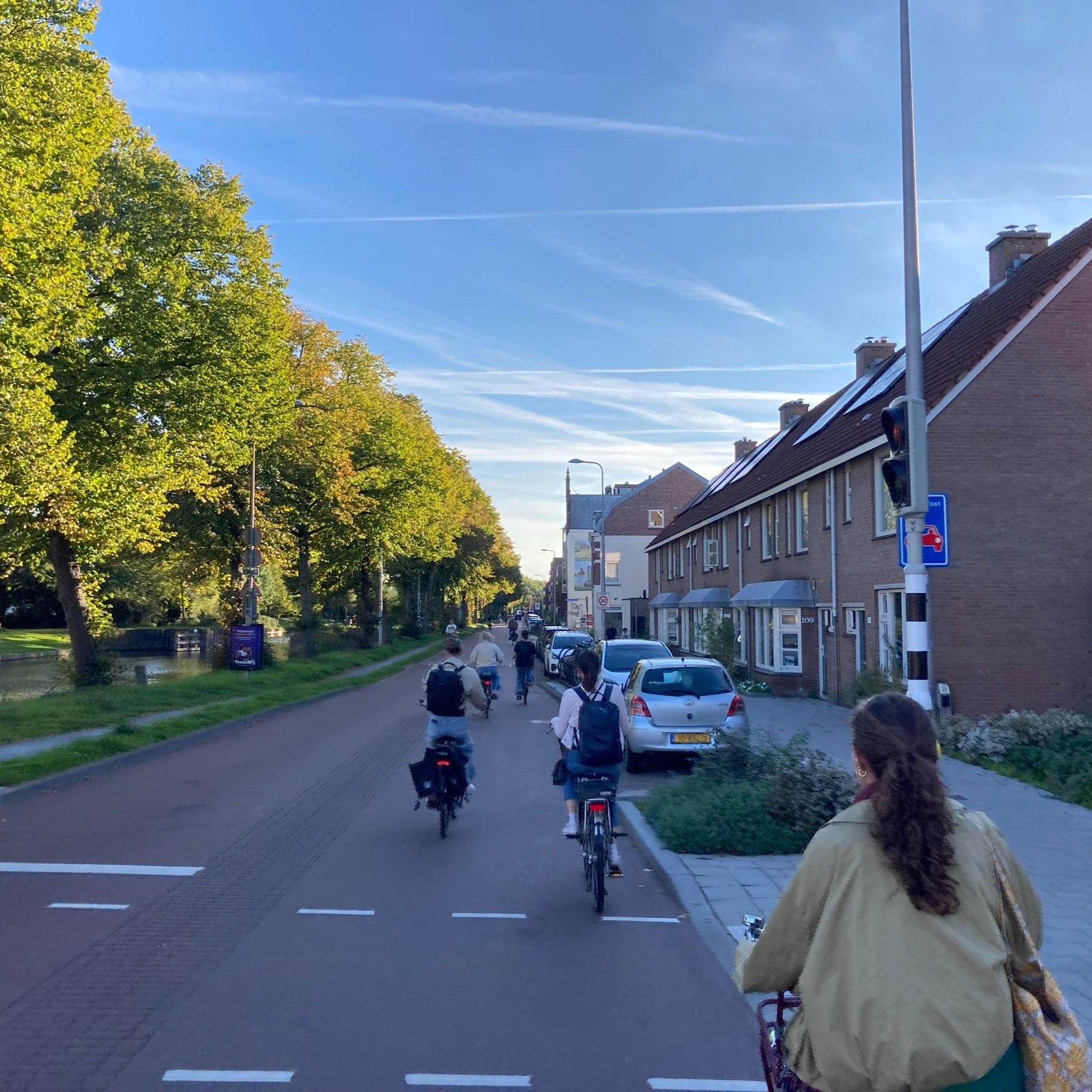
2. What we see today is bike network version 25.0 — I kept reminding myself that what I was seeing was the result of decades of development and not the first version of the network. In order to understand how to get to this mature state, we need to do the archaeology to decipher the sequence in which things were built.
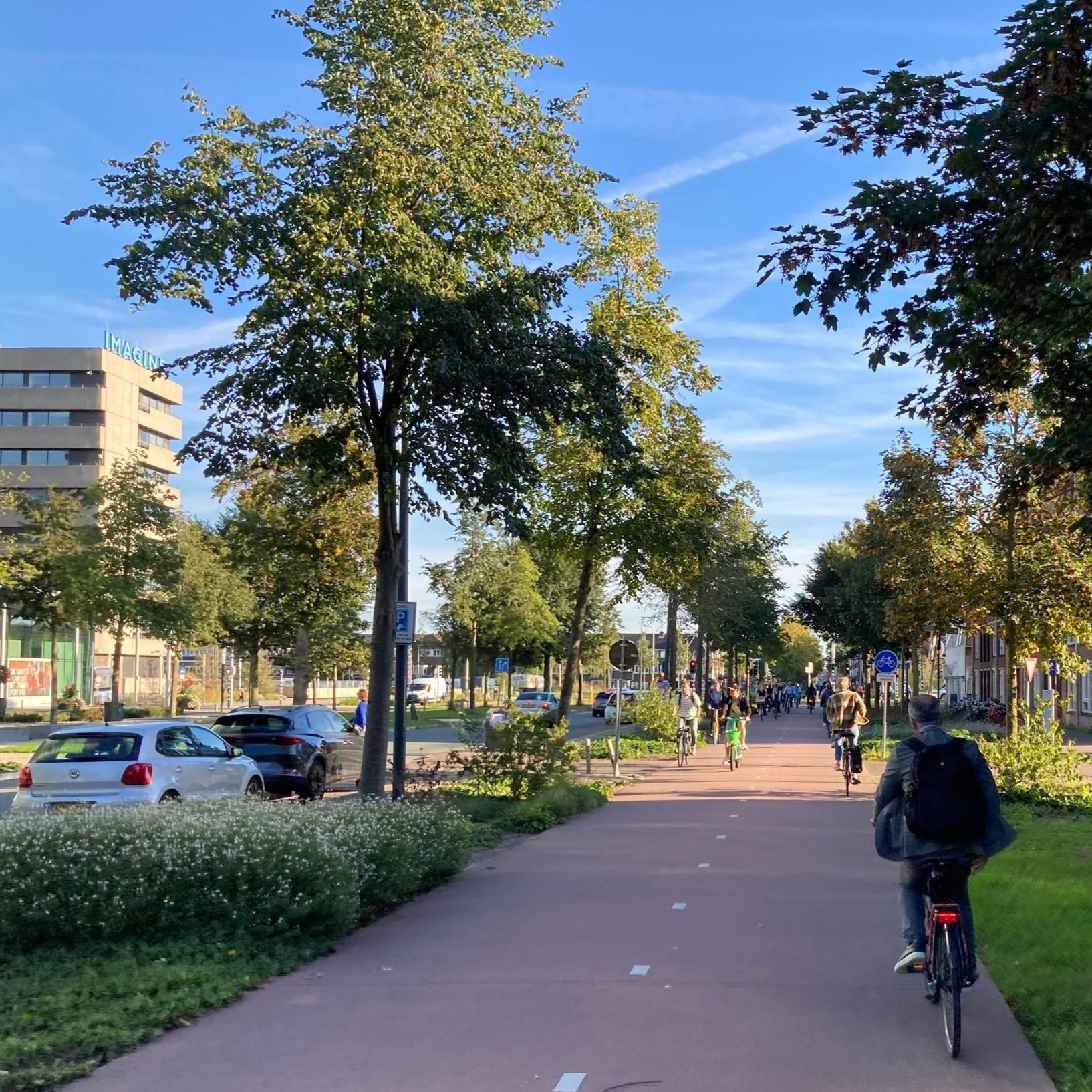
3. Don’t focus on the fancy stuff at first — I met with folks at the Dutch Cycling Embassy and they emphasized the importance of focusing at first on systemic traffic calming rather than high-end bridges and cycleways that don’t connect. In the Netherlands, low-cost facilities are everywhere and form the backbone of the network. There’s a term for this approach: ontvlechten, which means “disentangling” or “uncoupling” elements of the through driving network. Start with network-wide changes, build massive ridership, and then improve point locations with high-end bikeways.
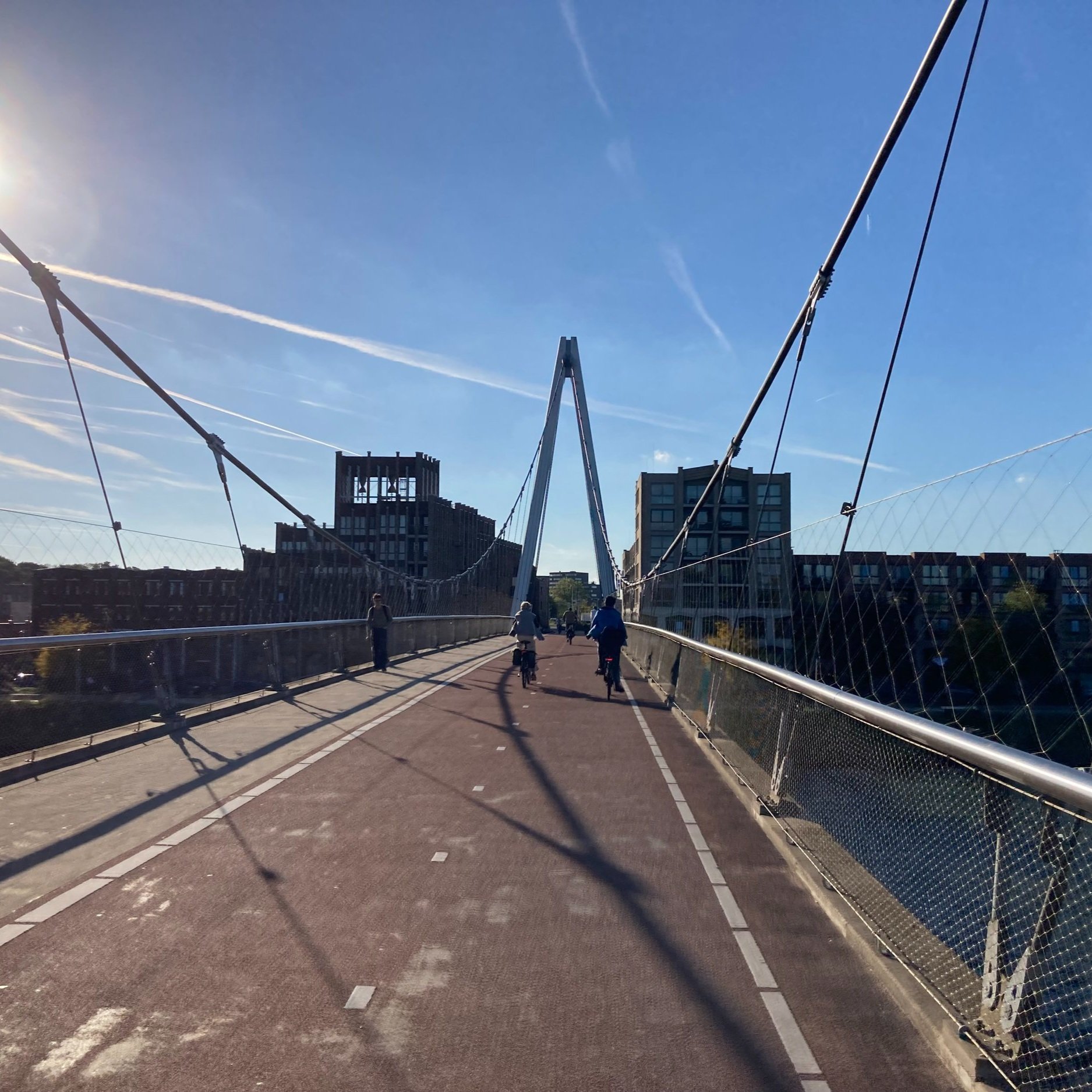
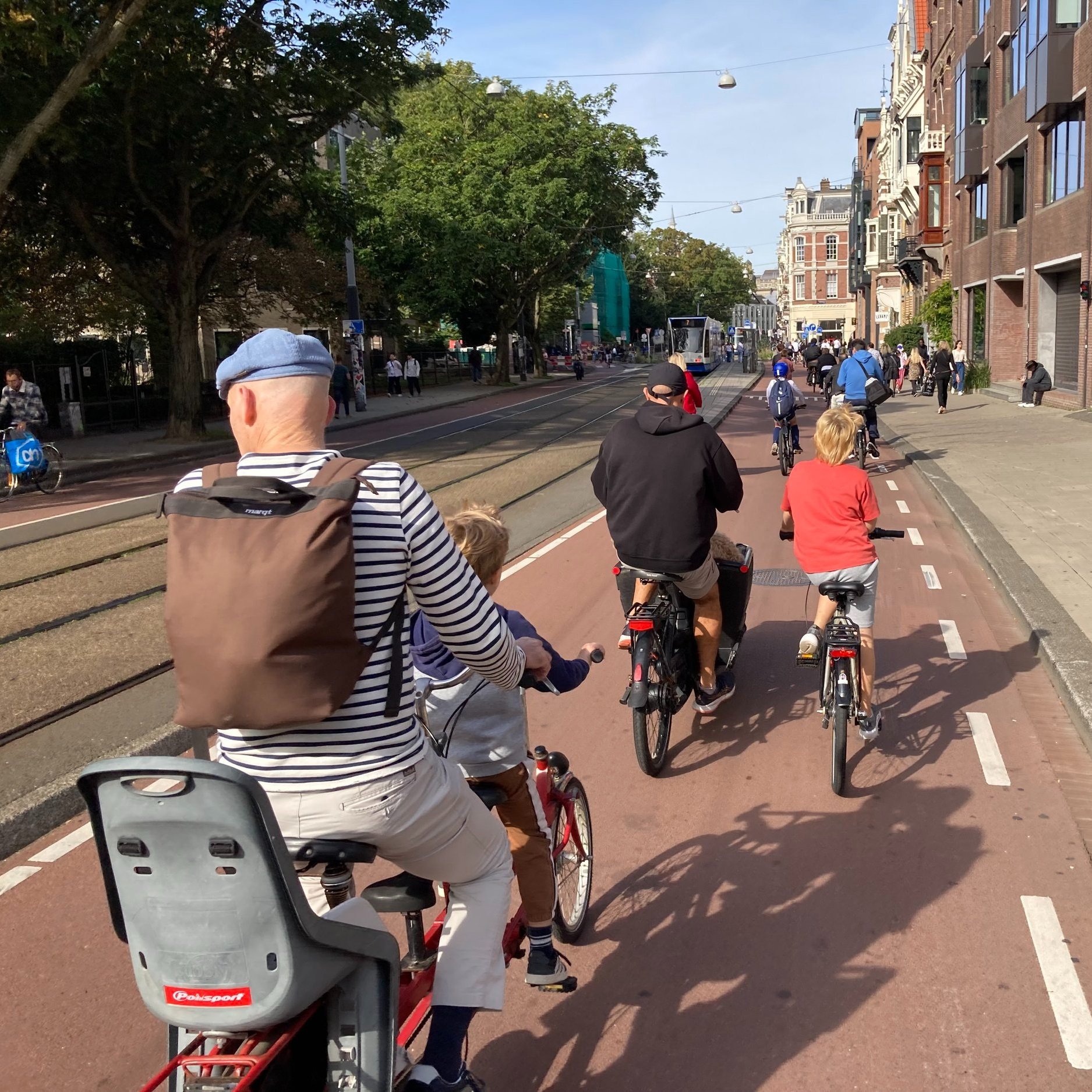
4. The Fietstraat is the end state — Fiestraat literally means “bike street”! I had coffee with cycling history professor Ruth Oldenziel (from the the podcast above) and what she said shocked me. She argues that the fietstraat, not the separated cycleway, is the optimal end state. I’m still trying to fully reconcile this argument, but when you experience scenes like the picture below, it starts to make sense. The entire space (except, in this case, for the tram lines) has become a bikeway and there are occasional slow-moving vehicles.
5. People respond favorably when they see it first — I interviewed Dr. Meredith Glaser, CEO of the Urban Cycling Institute, on the street below, which recently underwent a major transformation. Even in the Netherlands these things can get testy. So the city ran a series of demonstration projects to show neighbors how it would work and won their support. Now the street is quiet, paved with bricks, and surrounded by gardens and parked bikes. Plenty of pedestrians and riders use it. And occasionally a driver passes through or parks.