
Chapter 3. The “Urban Bikeway Design Guide” Revolution
The approach to innovation we propose on the following pages draws on three primary sources of inspiration. This book is a mashup of three texts from disparate fields that, in aggregate, can transform our hamfisted approach to innovation in the public right-of-way and make bike transportation a practical reality for millions of Americans.
The foundational tome is the National Association of City Transportation Officials (NACTO) “Urban Bikeway Design Guide,” which was first published in 2011.[22]
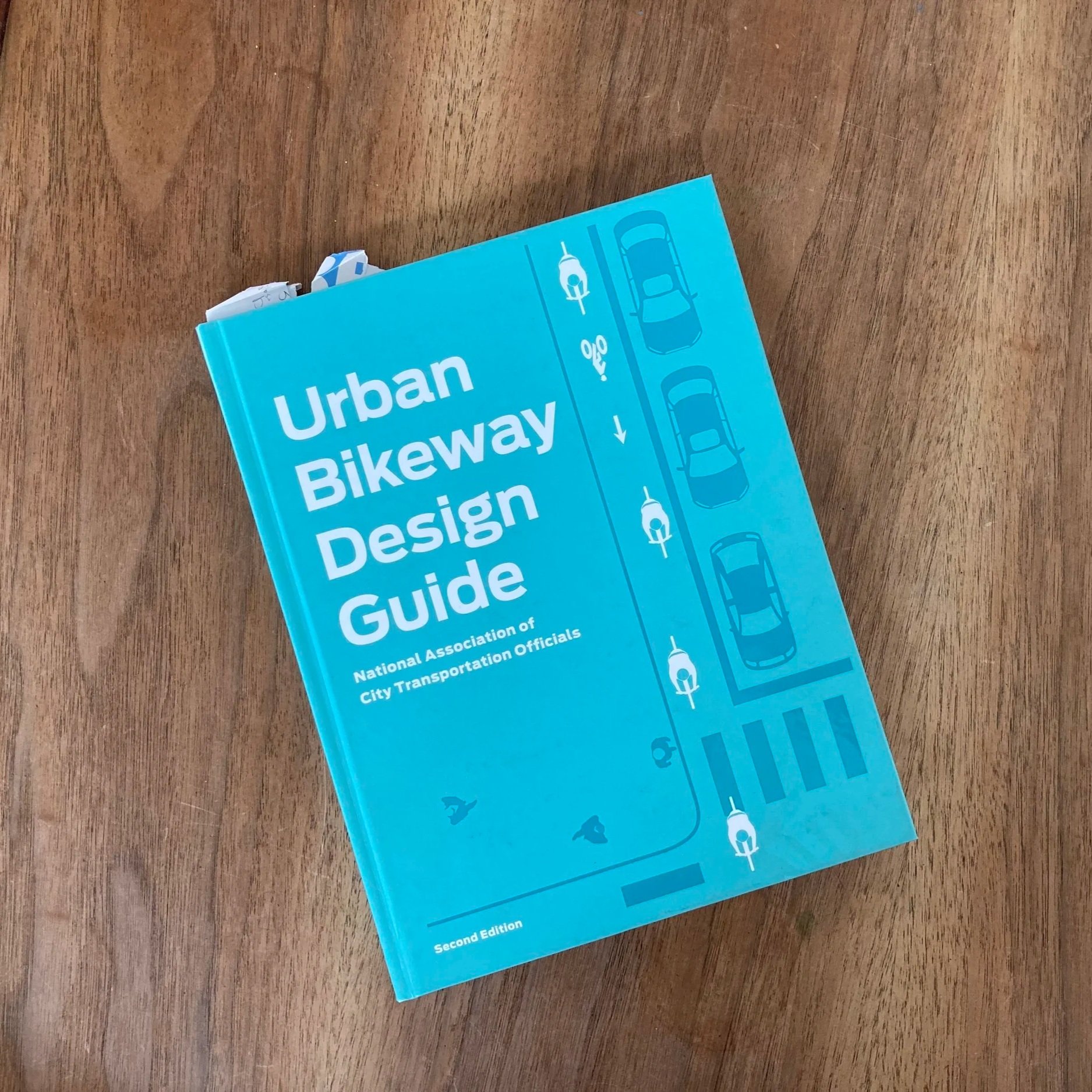
The book that launched a thousand bike lanes.
As you might expect from an organization with an 18-syllable name, the book is a wonkish tome of bike facility design. Curious how to design your “Bike Route Wayfinding”? NACTO’s got you covered (page 139.)[23]
That the book is decidedly not a page-turner belies its role as a harbinger of a revolution. For the first time, city transportation officials, as a collective, formally codified a vision for streets that went beyond moving as many cars as quickly as possible. This gave cities unprecedented cover to innovate on city streets.
In 2013, the Federal Highway Administration issued a memorandum supporting cities’ use of the Urban Bikeway Design Guide, cementing the book’s role in the way cities contemplate the use of the public right-of-way.[24]
The NACTO guide makes it clear that protected bike lanes and other “high-comfort” bike facilities belong on city streets and deserve space in the public right-of-way, and gives vivid design guidance for how bike facilities should be constructed.
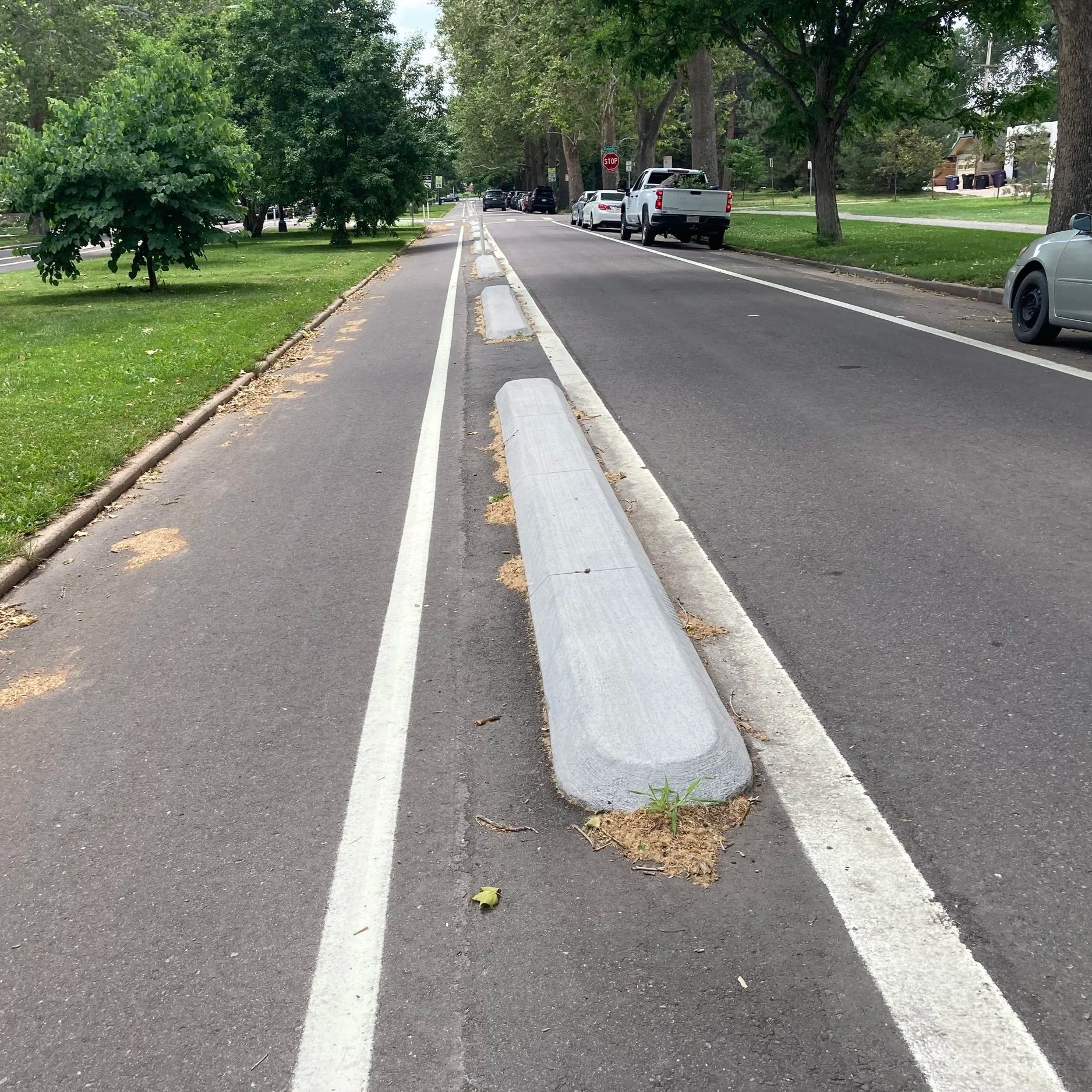
The Marion Street protected bike lane in Denver.
This is a seismic shift from vehicular cycling and “sharrows” – a failed design paradigm and unfortunate portmanteau of “share” and “arrow” – that direct cyclists to share the same infrastructure with drivers, usually on high volume, high speed streets.
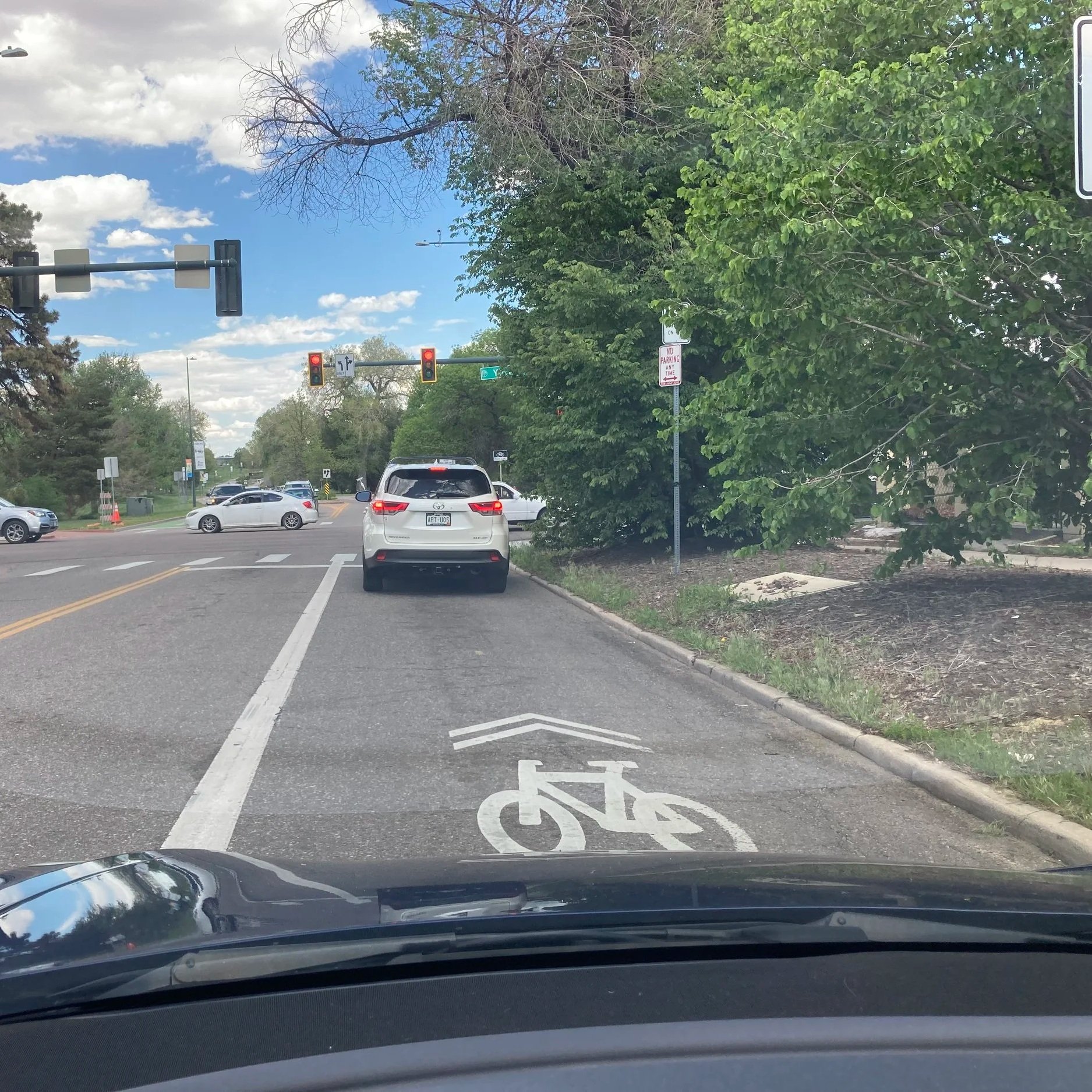
Sharrow hell near City Park in Denver.
The NACTO guide provides a methodology for building safe protected bike lanes, bike boulevards (quiet neighborhood streets made even quieter), and bike paths. With subsequent editions, the importance of connected networks has gotten more attention.[25]
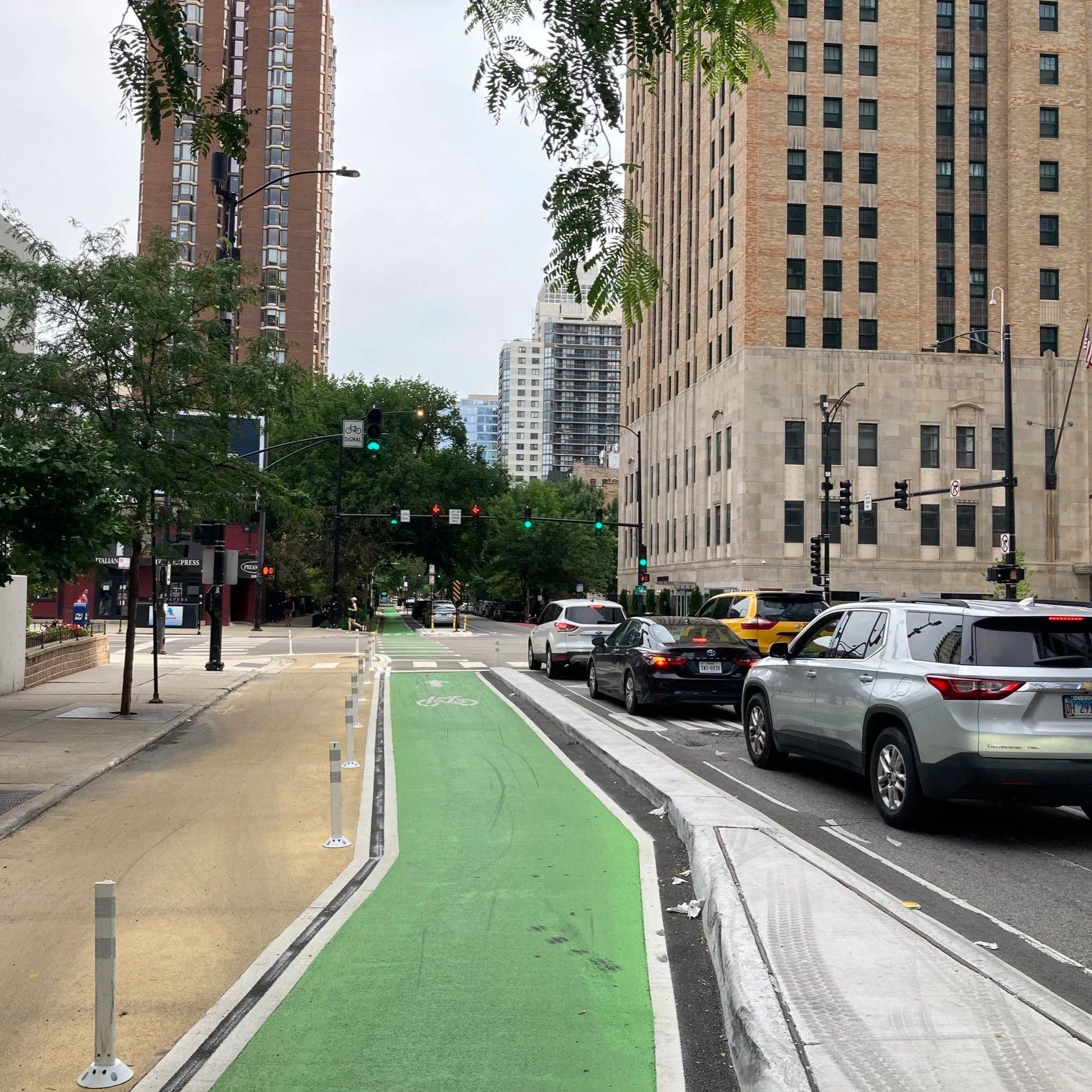
A protected bike lane in Chicago.
But there’s still something conspicuously missing from the Urban Bikeway Design Guide: an innovation methodology for connecting these facilities coherently and quickly, grappling with how to create bike networks now given budgetary and political capital constraints.
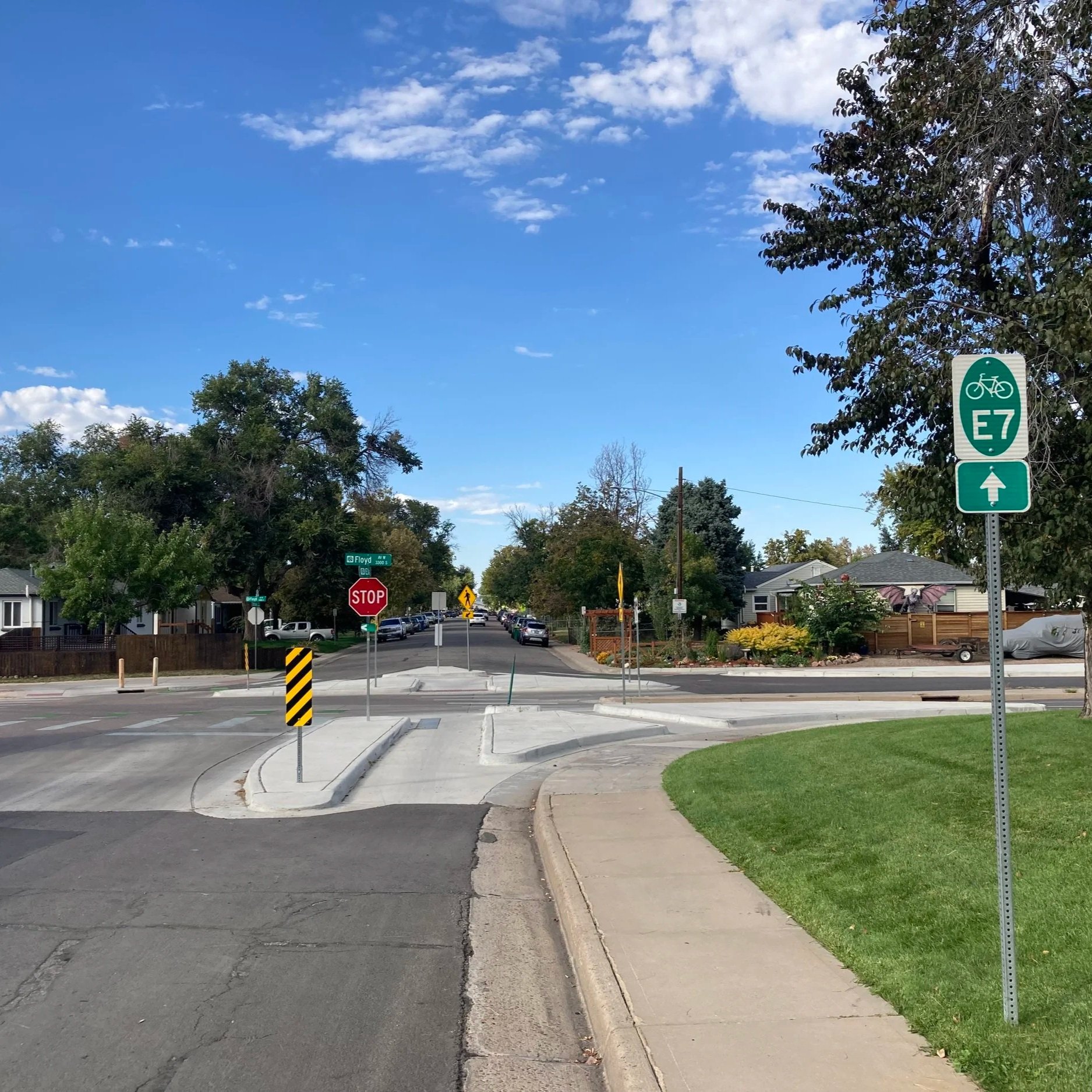
An isolated diverter in Englewood, CO that isn’t connected to a network.
A well-designed protected bike lane, in isolation, can’t be successful unless your goal is for people to just ride back and forth. A systems thinking approach is essential: how does that bike facility connect to everything else – and not at some indeterminate point in the future? How does it connect people to the places they want to go now? If it doesn’t, because it’s not networked, it’s like a fiber optic cable that isn’t connected to the internet.
References:
[22] https://nacto.org/publication/urban-bikeway-design-guide/
[23] Second edition of the NACTO Urban Bikeway Design Guide.